

If you are considering roof replacement for your commercial building, let Sentry Roofing install a roof that will provide years of watertight protection and help with energy cost savings as well. And if working spaces are not air conditioned a “cool roof” will benefit in keeping indoor temperatures lower, increasing worker comfort and productivity.
In recent years, improving energy efficiency in commercial buildings has been achieved through a variety of “high-tech” innovations. Developments in energy saving lighting and office equipment, building automation technology and more efficient HVAC systems have all helped building owners reduce utility costs.
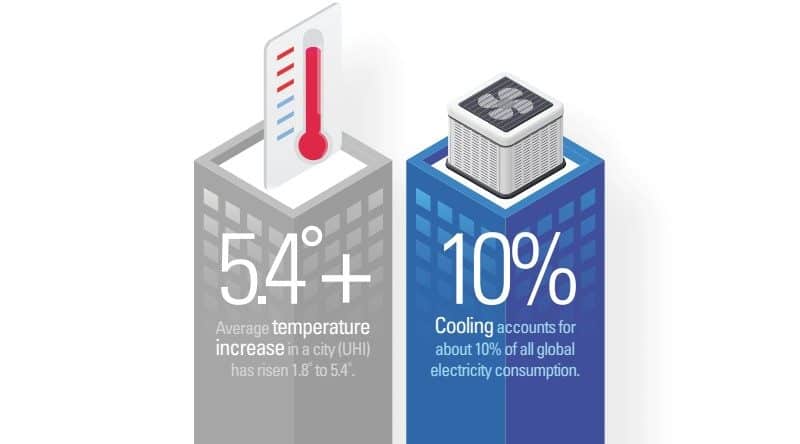
Air conditioning systems in particular use vast amounts of energy. Cooling is now the fastest growing use of energy in buildings, and ACs and electric fans already account for about 10% of all global electricity consumption. This is one of the most critical blind spots in the energy world today — by 2050, cooling demand could more than triple.* While greater access to much needed cooling services is a good thing, it places a major strain on our energy infrastructure.
By comparison reflective – “cool” – roofing is a relatively “low-tech” option that nonetheless can have a significant impact on energy efficiency and worker productivity. Cooler rooftop environment can also increase the life of the roof system, insulation, and HVAC systems.
Commercial roofs can become “cooler” from basically one of two types of cool roofing products on the market: reflective coatings or reflective membrane roofing systems. Silicone or acrylic spray coatings can be effective in reducing energy costs and may be useful in extending the life of an older roof system, but coatings are typically a short-term solution at best. A top quality, highly reflective membrane system will provide excellent energy savings and many years of trouble free service.
Single-Ply Roofing: The Best Cool Option
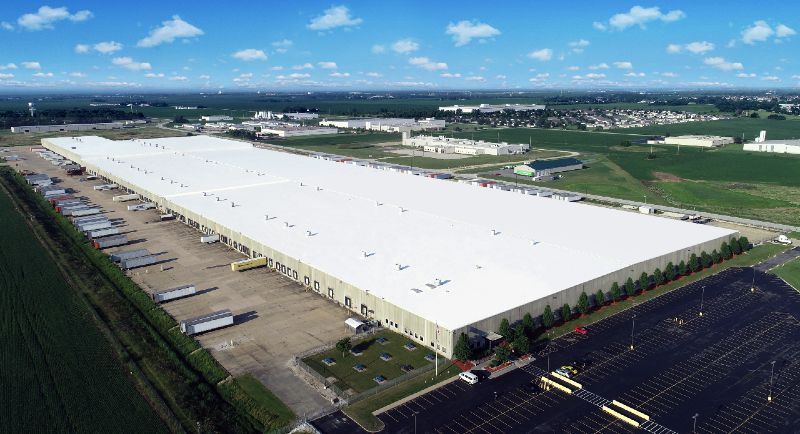
A significant commercial roofing trend has been the growing popularity of white, highly reflective single-ply roofing systems, especially in urban environments. As Lawrence Berkeley National Laboratory researchers report in a 2013 paper, Economic comparison of white, green, and black flat roofs in the United States: “the sunlight that is absorbed heats the roof, which increases cooling costs in air-conditioned buildings, increases discomfort in unconditioned buildings, increases mortality during heat waves and pollutes local and regional air.”.
Duro-Last membranes installed by Sentry offer several advantages over traditional darker roofing products due to their high reflectance and emissivity.
- Reflectance is the percentage of solar energy reflected by a roof surface. The higher the number, the less heat is transferred into the building.
- Emissivity is the percentage of heat energy a material absorbs, then sheds in the form of infrared radiation. Again, the higher this number is, the better, because it means that the material doesn’t retain heat.
Roof membranes with both high reflectivity and high emittance values help keep buildings cooler because less solar energy is transferred into the building and into the air surrounding rooftop HVAC units.
A cool roofing membrane manufactured by Duro-Last and installed by Sentry has a total solar emittance of up to 87% and reflectivity of up to 88% – among the highest in the commercial roofing industry. Reflective Duro-Last systems are contributing significantly to energy savings for commercial facilities throughout North America.
In addition to preventing heat transfer into the building, cool roofing systems help reduce rooftop HVAC loads. Temperatures on a black roof surface can reach 160 degrees or more on a hot sunny day; the temperature on a reflective roof may be as much as 70 degrees cooler on that same day. Those rooftop HVAC units on a dark roof will have to work harder to operate in the very hot air that’s surrounding them, compared to units on a cool roof. Because reflective roofing systems allow HVAC units to operate more building owners may be able to downsize air conditioning equipment when units need to be replaced.
The bottom line is that energy efficient, cool roofing can reduce a building’s annual air conditioning costs by up to 40 percent, depending on geographic location, building design and other factors.
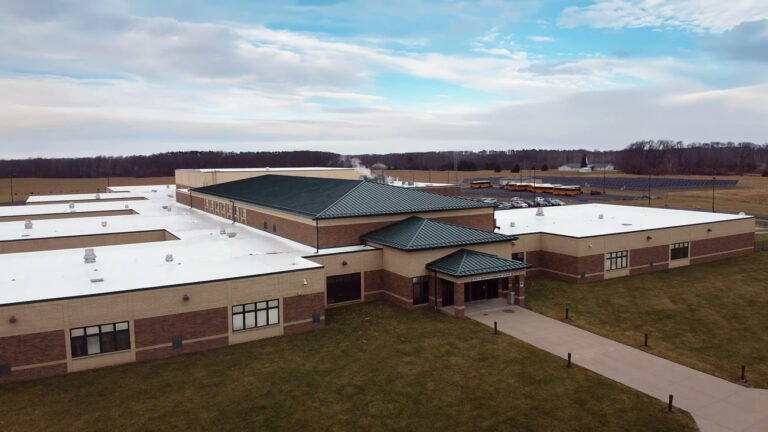
Of course, some facilities are not air-conditioned – such as agricultural buildings, warehouses and similar structures. However, reflective roof systems provide benefits here too, as the interior space remains cooler, improving working conditions and increasing productivity.
Cool roofing systems have other advantages as well:
- Cool roofs tend to last longer because reflective membranes help reduce thermal stress on roof system and other building components.
- Because reflective roof systems reduce the amount of radiation that penetrates the surface, they help preserve the effectiveness of underlying insulation materials. Studies have shown that extremely high temperatures lower the effective R-value of the most common types of roof insulation.
The primary reason to install a new roof for most commercial building owners and managers is one of necessity: to keep the facility watertight for the years into the future. The roofing professionals at Sentry have an unparalleled history of doing just that for 34 years, with satisfied customers in 40 states. And because we install Duro-Last, the industry leader in cool roofing systems, we can help you reduce your building energy consumption as well.
We would be honored to work with you on your next roofing project. Please contact us at your convenience for a roof inspection, evaluation, and detailed proposal for any roofing needs you may have.
*International Energy Agency, “The Future of Cooling.”


One Response
I have the same thoughts on much of this material. I am glad I’m not the only person who thinks this way. You have really written an excellent quality article here. Thank you very much.